What to Look for in a Commercial Photography Portfolio
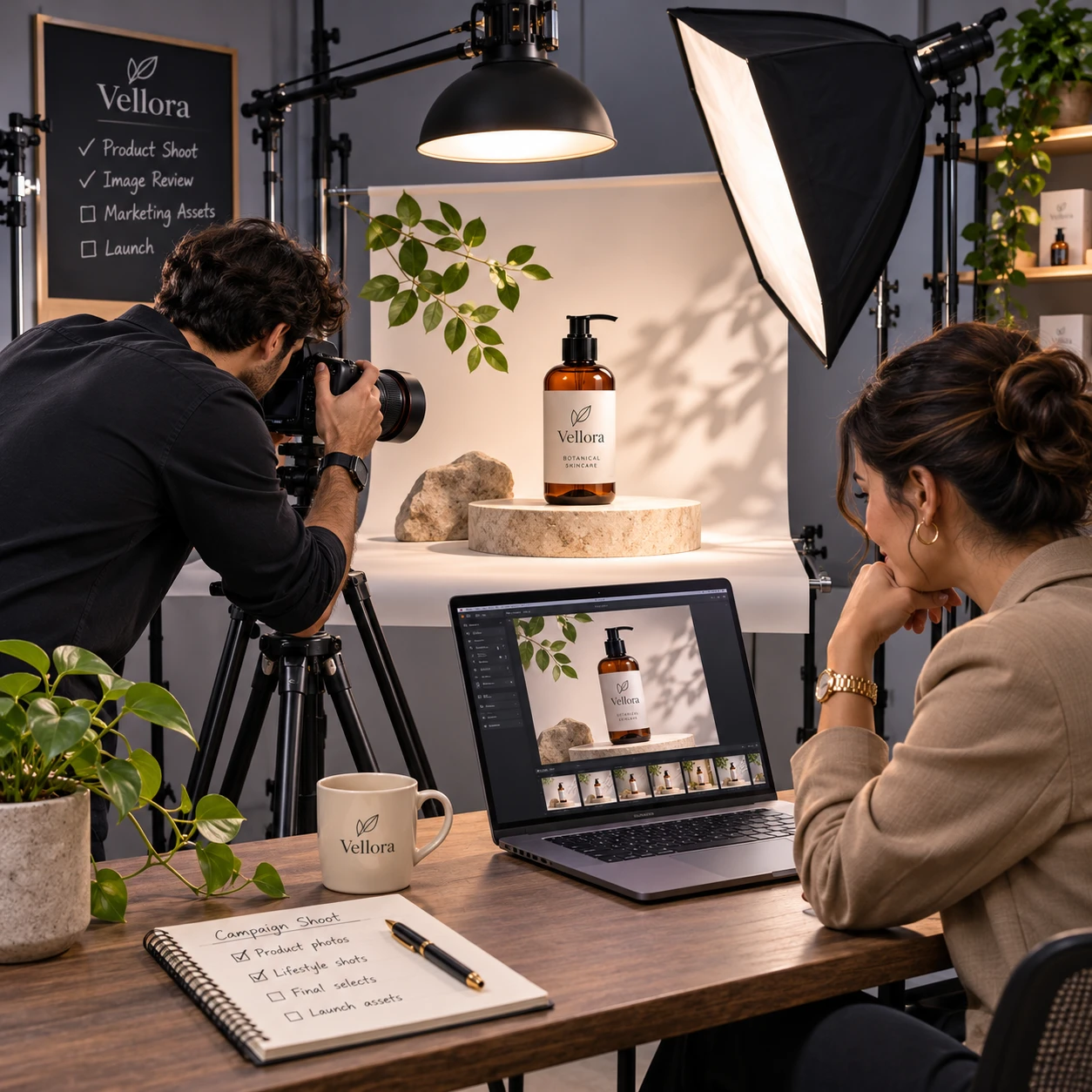
A commercial photography portfolio shows how a photographer turns a client brief into images made for a business purpose. When reviewing one, look beyond a few striking pictures: assess whether the work fits your brand identity, demonstrates relevant experience, stays consistent across complete projects, and comes with clear terms for image usage and licensing.
This approach helps you choose a photographer for product images, a service campaign, workplace portraits, or a broader brand story. It also helps you recognize when skills from wedding photography may transfer, and where commercial work calls for a different process.
Start With the Brief and Your Brand
Start by comparing the portfolio with your client brief, target audience, and brand identity. The right photographer can create images that support your business goals and feel consistent with how you want customers to see you.
Before browsing, write down what the photographs need to do. Are they for an online shop, a website homepage, social media, a print campaign, or a company profile? Note the audience, required formats, key messages, location, and any must-have subjects. A photographer’s portfolio should give you evidence that they can solve a similar visual problem.
Then consider the brand’s visual language. A business with a warm, handmade identity may need natural light, tactile details, and relaxed compositions. A technology company may need crisp product views, controlled reflections, and a more minimal palette. Neither style is automatically better; the question is whether the images feel credible for your customers and fit alongside your existing marketing.
- Audience: Would the people you want to reach respond to this tone and style?
- Purpose: Do the images communicate, inform, persuade, or document what you need?
- Brand fit: Could these photographs sit beside your current website, packaging, or campaign materials without looking out of place?
A beautiful image can still be wrong for the brief. Treat visual taste as one factor, not the whole decision.
Look for Relevant Commercial Work
Relevant commercial work shows that a photographer has handled assignments close to your needs. Look for similar subjects, settings, production demands, and intended uses rather than relying on a broad claim of experience.
For product photography, check whether the portfolio includes items with comparable materials, size, and finish. Reflective glass, food, clothing, and matte packaging each create different lighting and styling challenges. For service businesses, look for images that show people at work, explain the customer experience, or communicate an intangible offering clearly.
Exact industry matches are useful, but they are not essential. A photographer who has created a well-planned series for a different kind of business may still have the right approach. Ask whether the examples demonstrate the core demands of your assignment: working in a small space, directing staff who are not models, photographing a range of products, or producing images in several formats.
Look for signs that the photographer understands how images will be used. A campaign may need a mix of wide and vertical frames, clean space for text, close details, and images that work at different sizes. A portfolio with only tightly cropped hero shots may not prove they can deliver a practical image library.
If the portfolio does not show a close match, ask how the photographer would approach your brief and what similar experience they can discuss. A thoughtful explanation is more useful than an unsupported promise of results. Photography can support marketing, but no portfolio can guarantee sales or a particular business outcome.
Assess Consistency, Not Just Standout Images
Consistency is best judged by reviewing complete projects, not only a photographer’s strongest individual images. Look for dependable quality, coherent visual choices, and careful execution across a full set.
A portfolio is a selection, so it naturally highlights successes. Ask to see a complete gallery or a representative project from beginning to end. Check whether image quality holds across different angles, subjects, and lighting conditions. In a product series, for example, color, exposure, backgrounds, and framing should feel controlled enough to sit together on the same page.
Consistency does not mean every photograph should look identical. A useful commercial set may include a hero image, detail shots, environmental portraits, and candid moments. The variety should serve the brief while still feeling like one project. Pay attention to small details, too: straight horizons, clean edges, accurate color, tidy backgrounds, and natural-looking retouching.
Use the “series test”: choose five to ten images from one project and imagine them together on a website or campaign. Do they tell a coherent story? Are there gaps in the coverage? Does the quality stay steady, or does it depend on one exceptional frame?
Reviewing complete work takes longer than scanning a homepage, but it reduces the risk of hiring based on a single image that may not represent the photographer’s typical delivery.
Evaluate Technical and Creative Choices
Evaluate lighting, composition, color, and storytelling by asking whether each choice helps the intended image do its job. Technical skill matters most when it supports clarity, brand fit, and useful coverage.
Lighting should suit the subject and desired mood. Soft light can flatter people and reveal product texture; hard light may create stronger shape or a more graphic look. In a portfolio, notice whether the photographer controls shadows, highlights, and mixed light rather than allowing them to distract. For products, check whether color looks believable and reflective surfaces remain readable.
Composition also needs to work beyond the frame itself. Images for a website banner may need open space for a headline, while online shop photographs often benefit from clear, repeatable framing. Look for a balance of wide views, medium shots, and details where the brief calls for a full story.
Creative choices should reinforce the message. A workplace photograph might show collaboration in a way that feels natural to the company, rather than staging a generic scene. A food image should make the dish legible and appealing without obscuring what is being sold. Consider whether color grading, props, and retouching feel intentional and appropriate to the brand.
Camera equipment alone tells you little about the final result. A capable photographer can explain why they chose a lighting setup or composition for a particular assignment. The images themselves, and how well they serve their purpose, are stronger evidence.
Consider the Wedding Photography Connection
Wedding photography can provide transferable skills for commercial assignments, especially when the work involves people, fast-changing conditions, and storytelling. However, wedding experience does not automatically prove that a photographer can meet commercial production and licensing requirements.
Wedding photographers often learn to read a room, give clear direction, anticipate moments, and work efficiently when schedules or light change. Those skills can help with staff portraits, behind-the-scenes coverage, and brand stories in active workplaces. A photographer accustomed to making people feel comfortable may also help employees who are unused to being in front of a camera.
The distinction is the brief. Commercial projects may require planned shot lists, repeatable product setups, coordinated art direction, several image formats, or approval from a marketing team. They can also involve specific retouching standards, deadlines, and negotiated image usage. These are separate demands, so review commercial examples directly and ask how the photographer manages them.
For a business that needs candid portraits or a human-centered story, wedding experience may be a real advantage. For detailed product work or a tightly art-directed campaign, look for evidence of that specific capability, regardless of the photographer’s background.
Check Practical Fit Before Hiring
Before hiring, confirm the deliverables, usage rights, schedule, collaboration process, and budget in writing. A portfolio can show visual ability, but clear project terms determine whether the photographer can deliver what your business needs.
Ask how the photographer develops a shot list from the client brief, who supplies props or locations, and whether your team will review images during the shoot. Confirm the number and format of edited photographs, retouching scope, delivery date, and whether raw files are included. Raw files are not always part of a standard delivery, so clarify this rather than assuming.
Image usage and licensing deserve particular attention. Ask where you may use the images, for how long, in which territories, and whether the license covers paid advertising, packaging, social media, or third-party retailers. Ownership and usage rights vary by agreement and location; get the terms in writing and seek legal advice if the intended use is complex.
Discuss the budget alongside the scope. A lower fee may mean fewer final images, limited usage, or less production support. A larger production may include planning, assistants, location costs, styling, and broader licensing. Compare proposals by what they include, not just by the headline price.
Before committing, ask:
- Which project in your portfolio is closest to our brief, and what did your role include?
- How will you adapt the lighting and composition to our products, people, and brand?
- What deliverables, retouching, and usage rights are included in the quote?
- What is the timeline for planning, shooting, review, and final delivery?
- How do you handle changes to the brief or additional images?
A good fit is a photographer whose portfolio gives you relevant evidence and whose process makes the work, costs, and rights easy to understand. That combination is a more reliable basis for hiring than style or equipment alone.
Frequently Asked Questions
These answers summarize the main checks for evaluating a commercial photography portfolio and moving from review to a clear hiring decision.
What makes a commercial photography portfolio effective?
An effective portfolio shows work relevant to a client’s brief, consistent quality across projects, and clear control of lighting, composition, and visual storytelling. It should also help a business judge whether the photographer can deliver images for its intended channels.
Can a wedding photographer do commercial photography?
Yes, if the photographer has the skills and process your assignment requires. Wedding experience can transfer to people-focused storytelling and changing conditions, but review commercial work and confirm production, deliverables, and licensing experience.
How many portfolio examples should I review?
Review at least one complete project closely and several other relevant examples. A full gallery reveals consistency and coverage; additional projects show whether the photographer can adapt across different briefs.
What should I ask about image usage rights?
Ask which media, territories, time period, and business uses the license covers, including advertising, packaging, social platforms, and retailer use. Confirm the agreement in writing before the shoot.